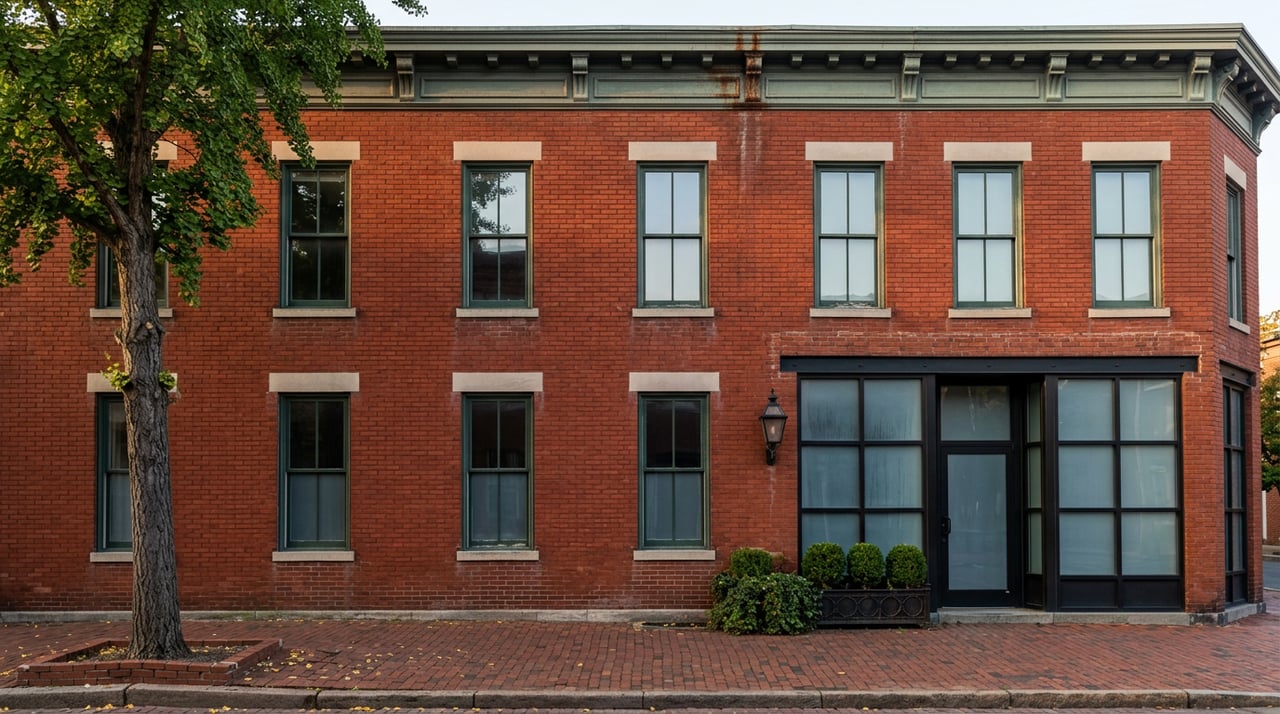
Ask anyone who has lived near Cherokee Street for more than a decade what happens on the Saturday closest to May 5, and they will describe the same scene: crowds packed into six blocks of South City, restaurant vendors who drove in from as far as Peoria, and a street that stopped functioning as a street and started functioning as a festival ground. That happened every year for 17 years. This year, it didn't happen at all.
Cherokee Street's Cinco de Mayo festival drew revelers to a free street party for more than a decade, and for 17 years the festival brought food, drink, and free festivities to the street. Then, in April, the Cherokee Street Community Improvement District pulled the plug. What replaced it over the following months says more about how this street actually works than the party ever did.
Why The Biggest Night On Cherokee Street Stopped Making Sense
The cancellation wasn't a surprise dressed up as one. Longtime vendors opted not to participate this year, and organizers said that made it too costly to ensure the safety of attendees. The past two years had already worn on the event through weather: a mid-day thunderstorm broke it up two years ago, and last year was a total rainout, all while security had to account for what are essentially six blocks in South City filling with a crowd that size.
The vendor pullback is the more interesting half of the story. Many vendors, mostly restaurants and some of which had traveled from as far as Peoria in past years, were pulling back this year. John Joern, who directs events for the Cherokee Street Community Improvement District, offered his own read on why. He believes it came down to a combination of the tough climate facing many restaurants and fears within the Latino community tied to federal immigration enforcement. Whatever the exact mix of causes, the math stopped working: a free, unticketed festival covering six blocks needs either gate revenue or a reliable base of paying vendors to fund security, and this year it had neither.
"Our concern is safety first and foremost," Joern said. "And funding is certainly an issue."
That's a blunt way to end a 17-year tradition, but it's also the kind of honesty that tells you something about how the street's business district actually thinks about its calendar. Big crowds are not the same thing as a healthy event.
What Showed Up Eleven Weeks Later
Even as the Cinco de Mayo cancellation made headlines, organizers were already building its replacement behind the scenes. They were working on a different festival, one they hoped would represent a different direction for the neighborhood, built around getting people engaging with local businesses rather than drawing in a big party crowd.
On June 27, that plan became Common Thread: A Textile Festival. Running from noon to 6 p.m., the event put more than 50 vendors both inside and outside existing businesses along Cherokee Street, stretching from Louisiana to Lemp Avenue. Instead of tacos and margaritas, the day ran on curated offerings from fiber artists and vendors specializing in vintage, handmade, and custom clothing, tapestry art, knitting, crochet, quilting, and leather goods.
The entertainment matched the smaller, stranger register the CID was aiming for. MO Variety, a grassroots circus led by aerialist Laura Lippert, brought performers to add some levity to the street, including a magician and scientist act from Zi Teng Wang at 2724 Cherokee and a hoop diving and diabolo performance from Chauncey Kroner at the corner of Missouri and Cherokee. Rather than close with a traditional runway show, the festival ended with what organizers called a catwalk open mic. Attendees were invited to strut their own purchases instead of watching models, with prizes for Best Score, Best Accessory, and Best Overall Outfit.
Joern's framing of the day captured what the CID was actually testing. "It's very Cherokee, and I feel like folks down here have the nerve to get up there," he said.
This Wasn't A Guess. It Was A Repeat Of What Already Works.
The reason Common Thread exists in this exact shape is that the CID had already run the experiment twice and watched it pay off. Joern pointed to the success of smaller festivals like December's Print Bazaar and the Jazz Crawl held each November as the model the new textile festival was drawing from.
Print Bazaar is the clearest proof of concept. Held every year on the first Saturday in December, which lands on December 5 this year, the event fills more than 30 storefronts and venues along Cherokee Street with upward of 100 artists selling prints, cards, and handmade goods, making it one of the region's largest holiday markets. Joern is explicit about why that format works for the businesses lining the street, not just the shoppers walking it. "Print Bazaar has grown massively in the last couple of years, and it's really great for the businesses, because it kind of guarantees them traffic, and from a shopping experience, it's excellent, because you have so much offered on the street with the vendors, plus the spaces that are open for holiday shopping," he says. "So we picked from that model a little bit."
The Jazz Crawl runs on the same logic with a different soundtrack. On the first Saturday in November, dance and music show up on every corner of Cherokee Street, with swing dancers and blues musicians tucked between vintage clothing racks and brass bands marching down the street in a second line parade. Organized today by the Cherokee Street Foundation and led by dance instructor Christian Frommelt, the event marked its 13th year on November 8, 2025, bringing back jazz crawl staples like the second line parade and dance battle while adding new artists and activations. On the same first-Saturday pattern, this year's crawl lands on November 7.
Neither of those events needed a gate or a six-block security perimeter to draw a crowd. They needed foot traffic that walked into storefronts instead of just past them, which is the exact metric a free-flowing street party never optimized for.
The Street's Calendar Now
If you live near Cherokee and you're trying to figure out what's actually on the books this year, here's the shape of it:
- Late winter: the Brass Band Blowout kicks off Mardi Gras season, with a free Music Crawl through the street's bars and venues from 4 to 6 p.m.
- June 27: Common Thread, the new textile festival, ran its first year with 50-plus vendors between Louisiana and Lemp.
- October 31: Halloween on Cherokee, with trick-or-treating at participating businesses and a bonfire and hot cider waiting at Love Bank Park.
- The Friday after Thanksgiving: Black-Owned Black Friday, a curated shopping day spotlighting the street's Black-owned brick-and-mortar businesses alongside vendors from around the region.
- November 7: the Jazz Crawl returns for its next edition, first Saturday of the month as always.
- December 5: the Print Bazaar, the street's longest-running boutique event and the model the CID built the rest of the calendar around.
Notice what's missing. There's no single mega-event anymore, no one Saturday that the whole street builds toward and then recovers from. What's left is a rhythm of smaller, more frequent reasons to walk down Cherokee, each one tied to a specific set of shops rather than a rented street closure.
Why This Actually Matters If You Live Here
The lesson in Cherokee Street's 2026 calendar isn't really about textiles or jazz. It's about what a commercial strip decides to optimize for once it has the data to choose. A street party that draws a large, free-flowing crowd generates a great photo and a real security bill, but nothing guarantees that crowd ever steps inside a business. A festival that puts 50 vendors inside existing storefronts, or sends swing dancers into a vintage shop for an afternoon, converts foot traffic into the kind of revenue that keeps a small business paying rent through January.
That's a useful thing to understand about a neighborhood before you've ever thought about buying into it, and it's just as useful if you already have. Cherokee Street's shops didn't get less interesting this year. The street just stopped needing a mega-party to prove it.
If you're weighing a move to South City or anywhere else in St. Louis where the character of a street matters as much as the square footage, Boutique Realty spends as much time tracking what's happening on the ground in these neighborhoods as we do tracking what's on the market. Get Your Instant Home Valuation and let's talk about what your next stretch of St. Louis actually looks like day to day.